
 Illustration
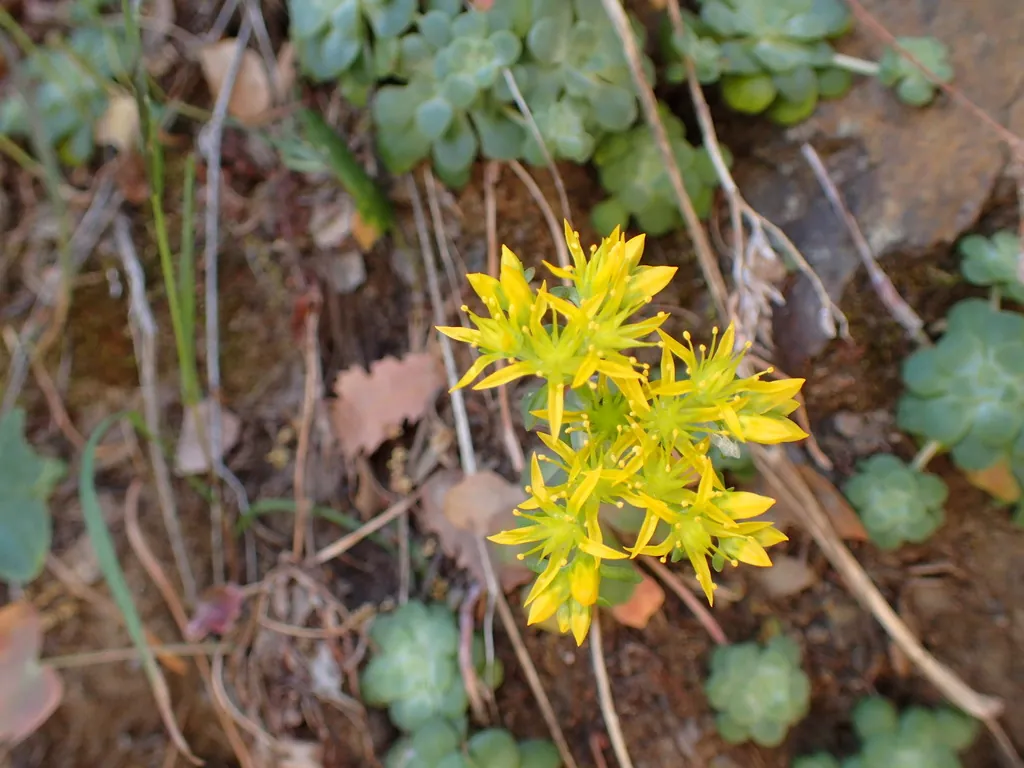
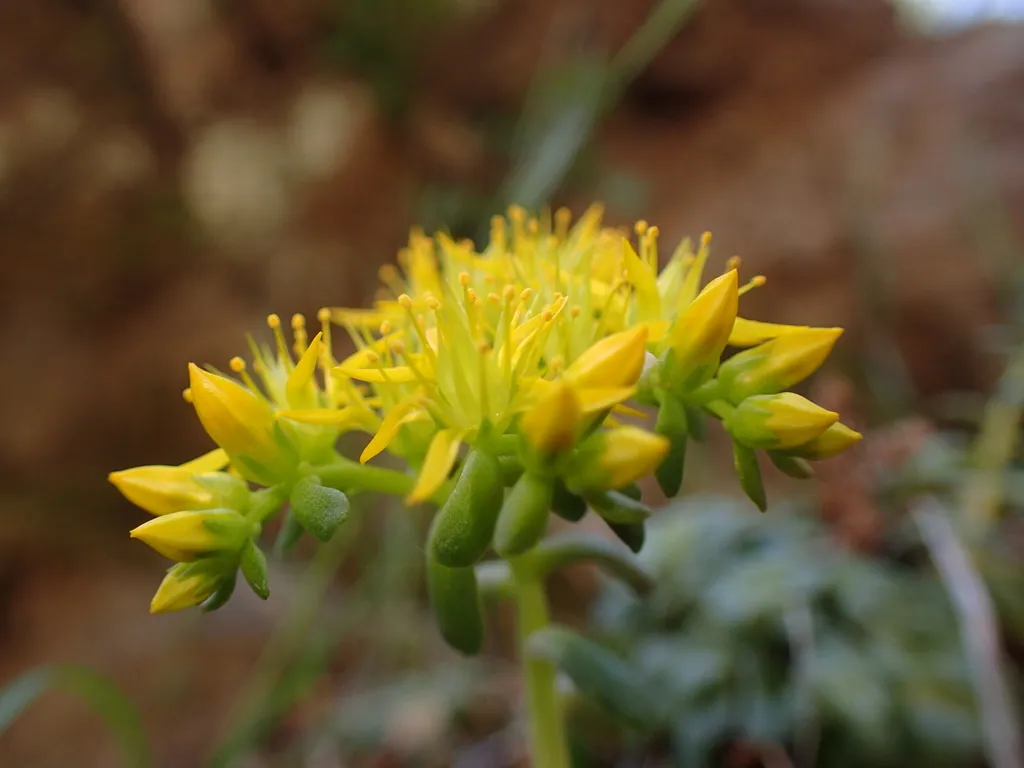

Photo credits and licenses
Real photographs from naturalists and photographers worldwide, each used under its own license. Credit: Photo by George Williams / iNaturalist (CC BY) and Photo by George Williams / iNaturalist (CC BY). How photos are sourced →

Creeping Sedum
Sedum
Also called stonecrop and creeping stonecrop
Also comes in white, pink and red.
Creeping Sedum blooms from June through August.
Months here are Northern Hemisphere months; in the Southern Hemisphere, shift them by six months.
Growing Creeping Sedum
Plant it in full sun. It prefers low water. It is hardy in USDA zones 3–9. Expect it to reach about 4 in tall and 16 in wide at maturity, in roughly 2 years (a house reading).
Is Creeping Sedum toxic to dogs or cats?
- Listed as toxic to dogs and cats by University of California Agriculture and Natural Resources.
Lists differ and none is complete. If a pet eats a plant and seems unwell, call a veterinarian or a pet poison helpline.
What was checked
Nine facts were checked against named botanical sources, each recorded beside the sources that carried it: mature height and spread, hardiness zones, sun, water, bloom months and color, the trait tags, and years to mature size, which rests on a recorded house rule where no publisher states one and is marked so. Soil, diseases, pests, toxicity and the plant's own names have not yet been read for this plant, and its trait tags are the ones a feature uses rather than every word a page prints. Each fact above carries its own mark. The planting, spacing and size sections are derived from these checked facts by a fixed rule, not checked separately, and the plant type is the library's own classification.
When to plant Creeping Sedum
Plant Creeping Sedum in early spring as soon as the soil is workable, or in early fall at least six weeks before your first frost, so roots establish in cool weather. In zone 6, the middle of its hardy zones 3 to 9, spring means March to May and fall means August or September. Once settled, it blooms from June to August.
Month-by-month timing for your zone is on the planting calendar; if you garden near zone 6, the middle of this plant's hardy range, start with zone 6 in March. Derived from the plant's category, zones and bloom months plus typical zone frost dates, not checked separately.
How big does Creeping Sedum get?
 4 intall5 ft 7 inan adult16 inwide
See Creeping Sedum in a garden plan: the planner shows it in 3D beside everything else you add, growing toward this size over the years.
How far apart to plant Creeping Sedum
Derived from the mature spread above by a fixed rule, not checked separately: spacing is the spread, center to center.
Space Creeping Sedum about 16 in apart, center to center, so each plant has room to reach its full width.
Add Creeping Sedum to a garden plan and the planner draws it at its full width, so you see the spacing before you buy.
Where these facts come from
Creeping Sedum's height, spread, hardiness zones, sun, water, bloom color and trait tags were checked against 6 published sources on October 21, 2026. Each one is linked below with every fact it carried, which can include a fact this page still marks as not yet checked, because a source carrying a value is not the same as the value being held to the standard. Facts not in that list, and the planting, spacing and size sections, are not covered by these sources.
- NC State Extensionheight, spread, hardiness zones, sun, water, bloom months and color and trait tags
- fortcollinsnursery.comFort Collins Nurserysun, water, bloom months and color and trait tags
- University of Wisconsin HorticultureUniversity of Wisconsin-Madison Extensionheight, spread, hardiness zones, sun and water
- content.ces.ncsu.eduNC State Extensionheight, bloom months and color and trait tags
- extension.missouri.eduUniversity of Missouri Extensionsun and water
- RHSRoyal Horticultural Societysun
How the checking works, and what each standard covers, is on the verified plants page.
Good to know about Creeping Sedum
Curated from university extensions, botanic gardens and other primary sources, with the source named on every note. A note reports what its source says; where that differs from a fact above, the fact above is this entry's stored value, and its mark says whether it has been checked.
Safety
Listed as toxic to dogs and cats by University of California Agriculture and Natural Resources, which lists the leaves as toxic if eaten and the sap as a skin irritant. per University of California ANR and NC State
Worth knowing
It runs on Crassulacean Acid Metabolism (CAM): it takes up carbon dioxide at night with its pores shut by day, which is how it survives baking, thin, dry sites. per Horticulturae
Evergreen depends on species
Some hold their leaves all winter (S. acre stays evergreen), while others like S. album redden and drop them. For year-round cover, choose an evergreen species. per NC State
Deer resistant, not deer-proof
Species pages list creeping sedums deer and rabbit resistant, but the genus note warns they can still be browsed. Treat them as resistant, not immune. per NC State
The top green-roof plant
Sedum is the most commonly used plant for extensive green roofs: resilient, low-maintenance, and shallow-rooted enough to thrive in the thin substrate up there. per Horticulturae and NC State
Some types spread aggressively
A few fast creepers turn weedy: S. acre can overwhelm plants its own height, and S. sarmentosum can smother young seedlings, though its shallow roots pull out easily. per NC State
A native for shade
Most creeping sedums demand hot, dry sun, but the native woodland stonecrop, S. ternatum, takes shade and moister ground, the pick for a shadier or damper spot. per NC State
Bees and butterflies feed
The open, nectar-rich star flowers draw bees and butterflies, and birds take the seed; it is a recognized bee-forage plant on pollinator green roofs. per NC State
What pairs well with Creeping Sedum
Good companions share its growing conditions and add something it lacks: an earlier or later bloom, a lower carpet in front, or structure through winter.
Russian Sage
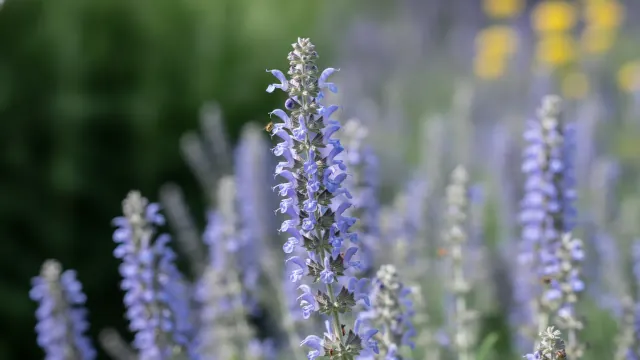
Shares full sun and low water; stands well above at 4 ft, a canopy to plant beneath; overlaps, then carries the display into mid fall; both are strong pollinator plants.
Creeping Phlox
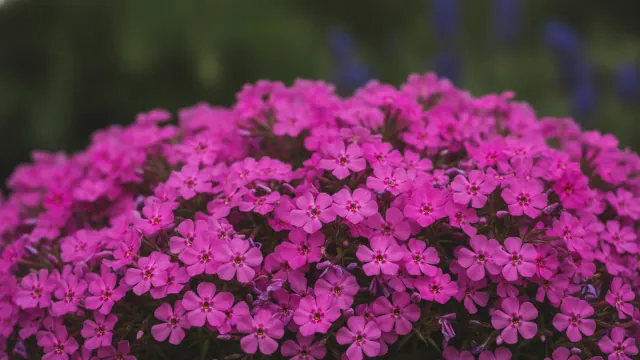
Shares full sun and low water; blooms in mid spring, before this one opens; both are strong pollinator plants, and they feed in different months; pink against yellow, for contrast.
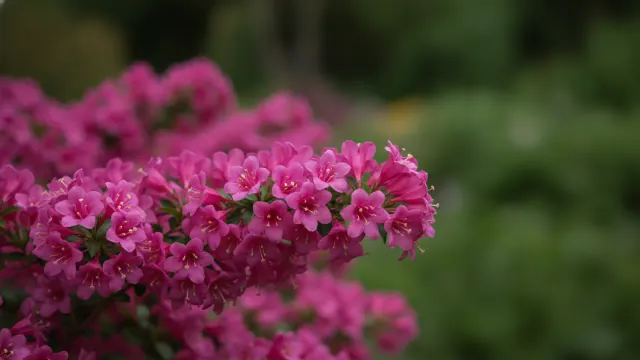
Weigela
Shares full sun and low to moderate water; opens in late spring and overlaps into this one's season; stands well above at 5 ft, a canopy to plant beneath; both are strong pollinator plants.
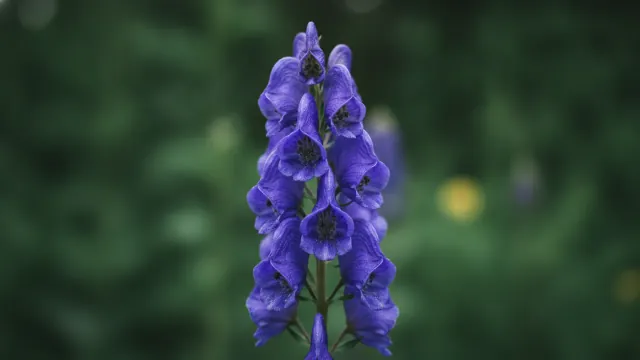
Monkshood
Takes full sun to part sun and low to moderate water; overlaps, then carries the display into early fall; stands well above at 4 ft, a canopy to plant beneath; both offer pollinator forage.
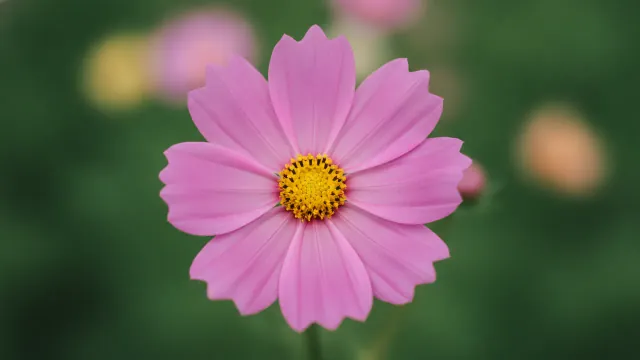
Cosmos
Shares full sun and low water; stands well above at 3.5 ft, a canopy to plant beneath; both are strong pollinator plants.
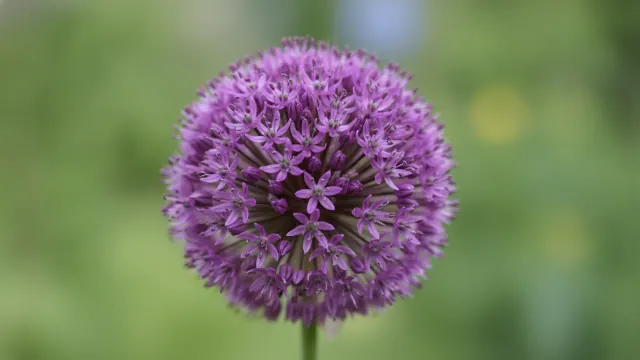
Giant Allium
Shares full sun and low water; opens in late spring and overlaps into this one's season; both are strong pollinator plants; taller at 3 ft, for the layer behind it.
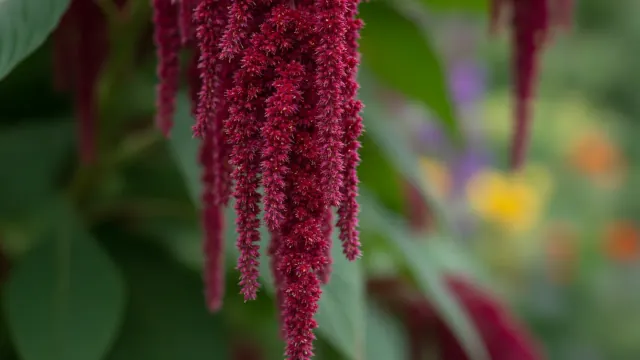
Love-Lies-Bleeding
Shares full sun and low to moderate water; stands well above at 3.5 ft, a canopy to plant beneath; overlaps, then carries the display into mid fall; both are strong pollinator plants.

Bidens
Shares full sun and low water; overlaps, then carries the display into mid fall; both are strong pollinator plants; taller at 12 in, for the layer behind it.
Featured in these guides
Explore similar plants
You might also like
Design a garden with this
Drop this plant onto a 3D plan, see how it fills in, and watch your whole garden bloom across the year.