
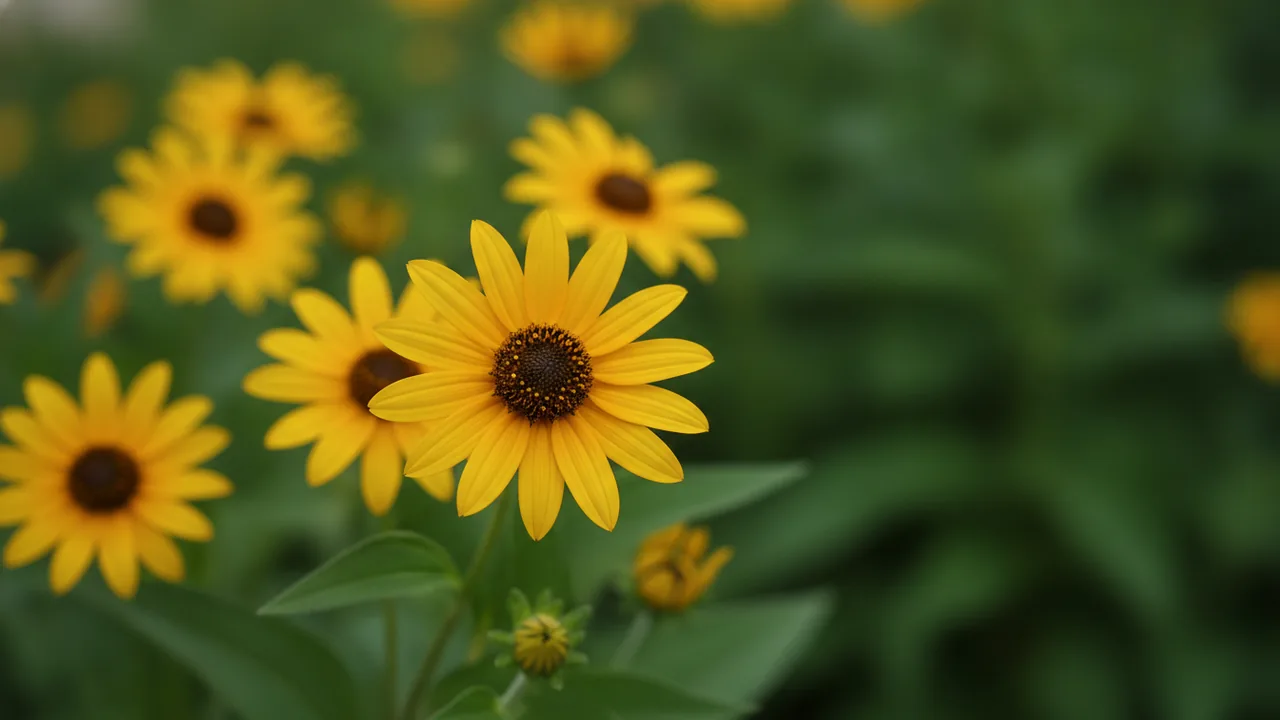
 Illustration


False Sunflower
Heliopsis
Also comes in orange.
False Sunflower blooms from July through September.
Months here are Northern Hemisphere months; in the Southern Hemisphere, shift them by six months.
Growing False Sunflower
Plant it in full sun. It prefers moderate water. It is hardy in USDA zones 3–9. Expect it to reach about 4 ft tall and 2 ft wide at maturity, in roughly 2 years (a house reading).
Pets
- No toxic listing found for dogs and cats in the sources we check.
Lists differ and none is complete. If a pet eats a plant and seems unwell, call a veterinarian or a pet poison helpline.
No toxicity note is on file for False Sunflower. That is not a clearance: check its safety for people and pets before planting.
What was checked
Nine facts were checked against named botanical sources, each recorded beside the sources that carried it: mature height and spread, hardiness zones, sun, water, bloom months and color, the trait tags, and years to mature size, which rests on a recorded house rule where no publisher states one and is marked so. Soil, diseases, pests, toxicity and the plant's own names have not yet been read for this plant, and its trait tags are the ones a feature uses rather than every word a page prints. Each fact above carries its own mark. The planting, spacing and size sections are derived from these checked facts by a fixed rule, not checked separately, and the plant type is the library's own classification.
When to plant False Sunflower
Plant False Sunflower in early spring as soon as the soil is workable, or in early fall at least six weeks before your first frost, so roots establish in cool weather. In zone 6, the middle of its hardy zones 3 to 9, spring means March to May and fall means August or September. Once settled, it blooms from July to September.
Month-by-month timing for your zone is on the planting calendar; if you garden near zone 6, the middle of this plant's hardy range, start with zone 6 in March. Derived from the plant's category, zones and bloom months plus typical zone frost dates, not checked separately.
How big does False Sunflower get?
 4 fttall5 ft 7 inan adult2 ftwide
See False Sunflower in a garden plan: the planner shows it in 3D beside everything else you add, growing toward this size over the years.
How far apart to plant False Sunflower
Derived from the mature spread above by a fixed rule, not checked separately: spacing is the spread, center to center.
Space False Sunflower about 2 ft apart, center to center, so each plant has room to reach its full width.
Add False Sunflower to a garden plan and the planner draws it at its full width, so you see the spacing before you buy.
Where these facts come from
False Sunflower's height, spread, hardiness zones, sun, water, bloom color and trait tags were checked against 8 published sources on October 20, 2026. Each one is linked below with every fact it carried, which can include a fact this page still marks as not yet checked, because a source carrying a value is not the same as the value being held to the standard. Facts not in that list, and the planting, spacing and size sections, are not covered by these sources.
- bloomindesigns.comBloomin Designs Nurseryheight, spread, hardiness zones, water, bloom months and color and trait tags
- promessedefleurs.iePromesse de Fleursheight, spread, water, bloom months and color and trait tags
- Iowa State University Extensionand Outreachheight, sun, bloom months and color and trait tags
- Chicago Botanic Gardensun
- Missouri Botanical Gardensun
- NC State ExtensionGardener Plant Toolboxsun
- RHSRoyal Horticultural Societysun
- University of Illinois Extensionsun
How the checking works, and what each standard covers, is on the verified plants page.
Where it grows wild
Native to 38 states and 6 provinces
United States: Alabama, Arkansas, Colorado, Connecticut, Delaware, Georgia, Illinois, Indiana, Iowa, Kansas, Kentucky, Louisiana, Maine, Maryland, Massachusetts, Michigan, Minnesota, Mississippi, Missouri, Nebraska, New Hampshire, New Jersey, New Mexico, New York, North Carolina, North Dakota, Ohio, Oklahoma, Pennsylvania, Rhode Island, South Carolina, South Dakota, Tennessee, Texas, Vermont, Virginia, West Virginia, Wisconsin and 26 more
Canada: Manitoba, New Brunswick, Newfoundland, Ontario, Quebec, Saskatchewan
Recorded growing wild in 1,084 counties.
Range data from the World Checklist of Vascular Plants, Royal Botanic Gardens, Kew (CC BY 4.0, adapted) and USDA PLANTS. How the native range is credited.
1 more variety in the False Sunflower group
Same genus, similar care - pick the variety you are growing.
Every plant in the group blooms from July through September.
Compare every variety in the False Sunflower group
Every figure is the variety's own page fact. Tap a name to open it.
| Variety | Color | Blooms | Hardiness | Sun | Size (H × W) |
|---|---|---|---|---|---|
| Athena Gold | Yellow | Jul–Sep | Zones 4–8 | Full sun | 20 in × 20 in |
| Falsethis page | Yellow | Jul–Sep | Zones 3–9 | Full sun | 4 ft × 2 ft |
Good to know about False Sunflower
Curated from university extensions, botanic gardens and other primary sources, with the source named on every note. A note reports what its source says; where that differs from a fact above, the fact above is this entry's stored value, and its mark says whether it has been checked.
Worth knowing
Feed it too well and it flops. Rich or over-fertilized soil, shade and constant moisture make the tall stems lean; full sun and lean soil keep them upright. per Chicago Botanic Garden and Missouri Botanical
How disease-prone it is
In full sun with good airflow it is largely trouble-free, but crowded, shaded, over-fed or humid plantings get powdery mildew and rust. The fix is spacing, not spraying. per NC State and Missouri Botanical
Feeds pollinators and birds
The showy blooms draw bees, butterflies and hummingbirds; songbirds eat the seeds in fall, so leaving spent heads standing feeds the birds. per NC State
Usually left alone by deer
Generally deer-resistant and not much browsed, though very hungry deer may still sample it. per NC State and Chicago Botanic Garden
Self-sows into colonies
It self-sows readily and can form colonies. Deadhead spent flowers before the seed sets to curb unwanted volunteers, or leave them to spread. per NC State and Missouri Botanical
Why 'false' sunflower
It looks like a true sunflower but sits in the genus Heliopsis, not Helianthus, and unlike annual sunflowers it is a long-lived clumping perennial. per NC State and Iowa State
What pairs well with False Sunflower
Good companions share its growing conditions and add something it lacks: an earlier or later bloom, a lower carpet in front, or structure through winter.
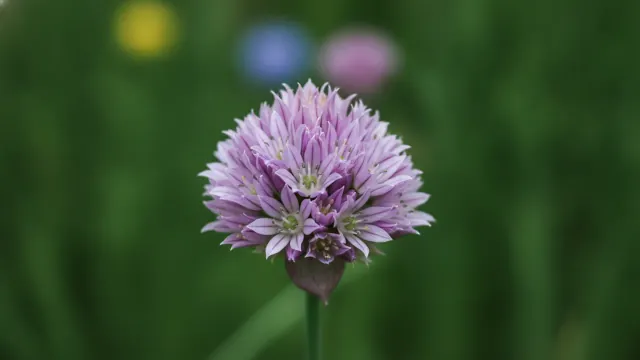
Chives
Shares full sun and moderate water; blooms in late spring, before this one opens; both are strong pollinator plants, and they feed in different months; lower at 12 in, for the front of the border.
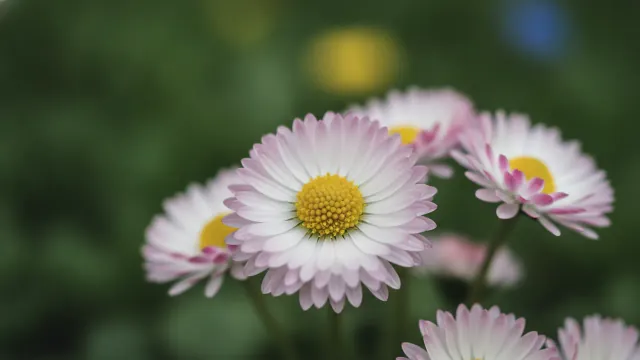
English Daisy
Shares full sun and moderate water; blooms in mid spring, before this one opens; low at 6 in, to carpet the ground beneath; both offer pollinator forage, in different months.
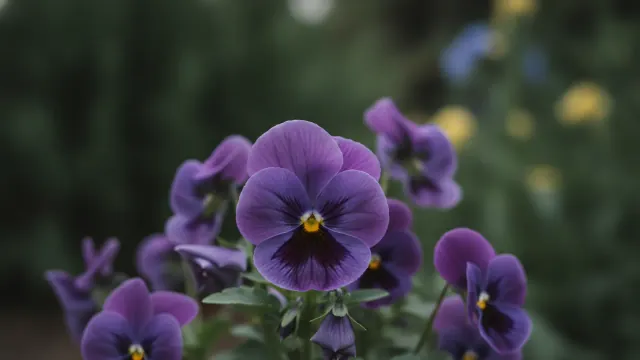
Pansy
Takes full sun to part sun and moderate water; blooms in early spring, before this one opens; lower at 8 in, for the front of the border; both offer pollinator forage, in different months.
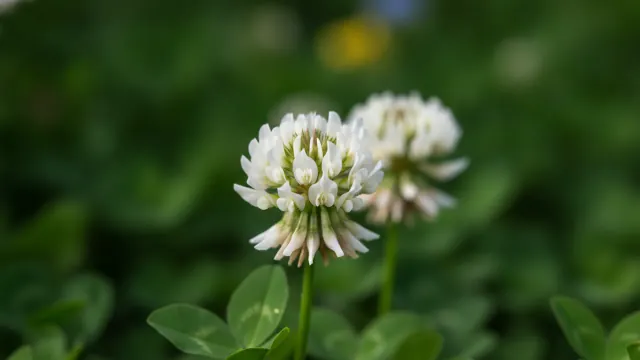
White Clover
Shares full sun and moderate water; opens in late spring and overlaps into this one's season; low at 4 in, to carpet the ground beneath; both are strong pollinator plants.
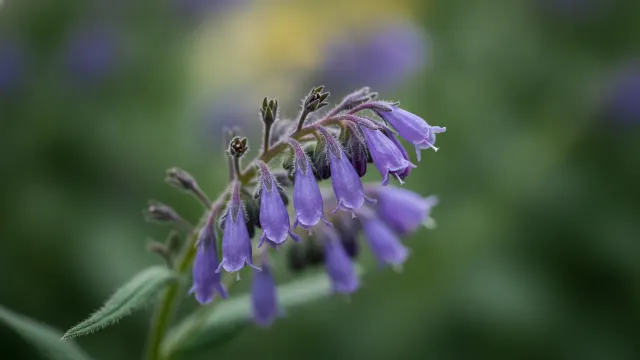
Common Comfrey
Shares full sun and moderate water; blooms in late spring, before this one opens; both are strong pollinator plants, and they feed in different months; lower at 2.5 ft, for the front of the border.
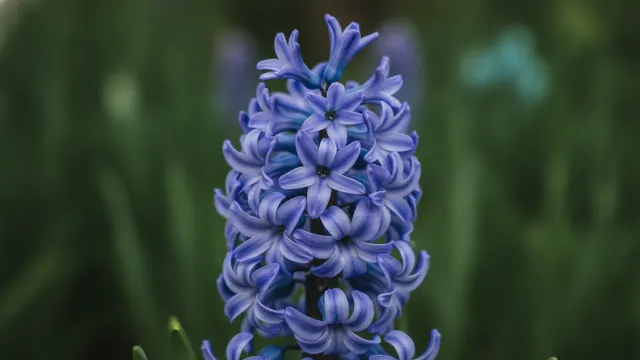
Hyacinth
Shares full sun and moderate water; blooms in early spring, before this one opens; lower at 10 in, for the front of the border; both offer pollinator forage, in different months.
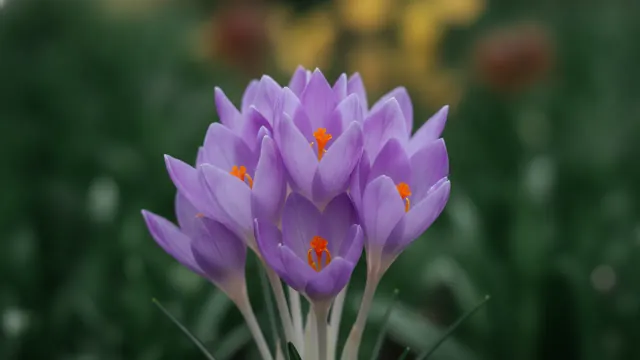
Autumn Crocus
Shares full sun and moderate water; overlaps, then carries the display into mid fall; low at 6 in, to carpet the ground beneath; both offer pollinator forage.
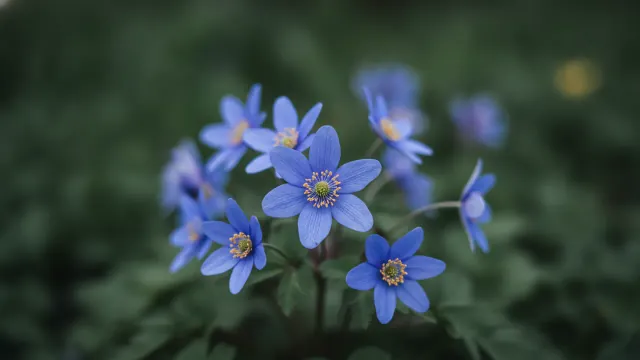
Windflower
Takes full sun to part sun and moderate water; blooms in early spring, before this one opens; low at 6 in, to carpet the ground beneath; both are strong pollinator plants, and they feed in different months.
Explore similar plants
You might also like
Design a garden with this
Drop this plant onto a 3D plan, see how it fills in, and watch your whole garden bloom across the year.